Southwest Kenya
Maasai Mara
Kenya's most famous grassland, and its most reliable big-cat country. Busy during migration season, quietly excellent for much of the rest of the year.
Overview
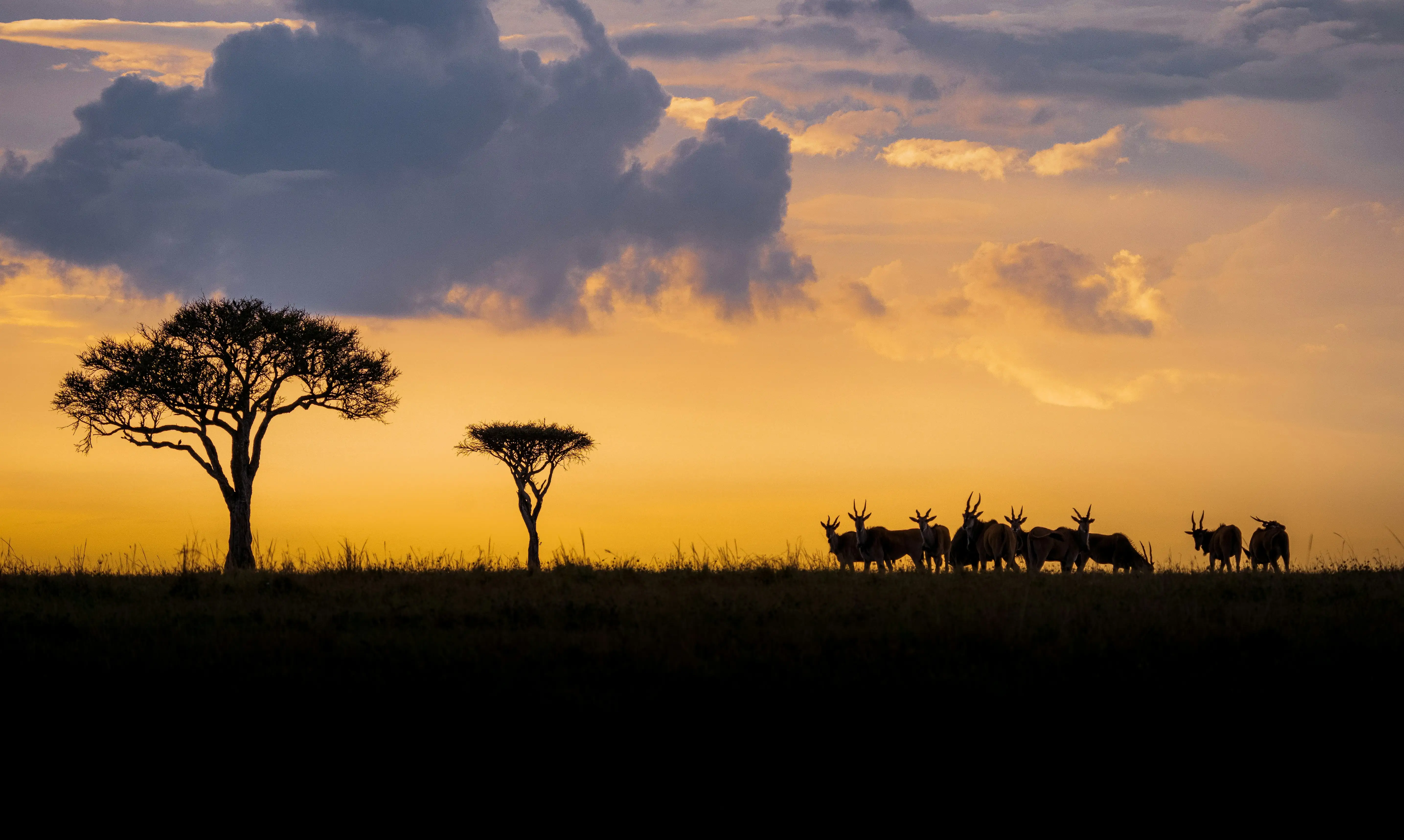
The Mara is the northern part of the same ecosystem as Tanzania’s Serengeti. It is also the Kenya many travellers picture before they arrive: rolling grassland, scattered balanites trees, the Oloololo Escarpment along the western edge, and the Mara River running through the reserve. It is the busiest safari area in the country, and that is worth saying plainly. It is also one of Kenya’s most reliable places for big cats. The difference between a crowded Mara and a quieter one often comes down to where you stay, when you travel, and who guides you.
Landscape
Open plains with long sightlines, riverine forest along the Mara and Talek rivers, and the escarpment rising in the west.
Wildlife
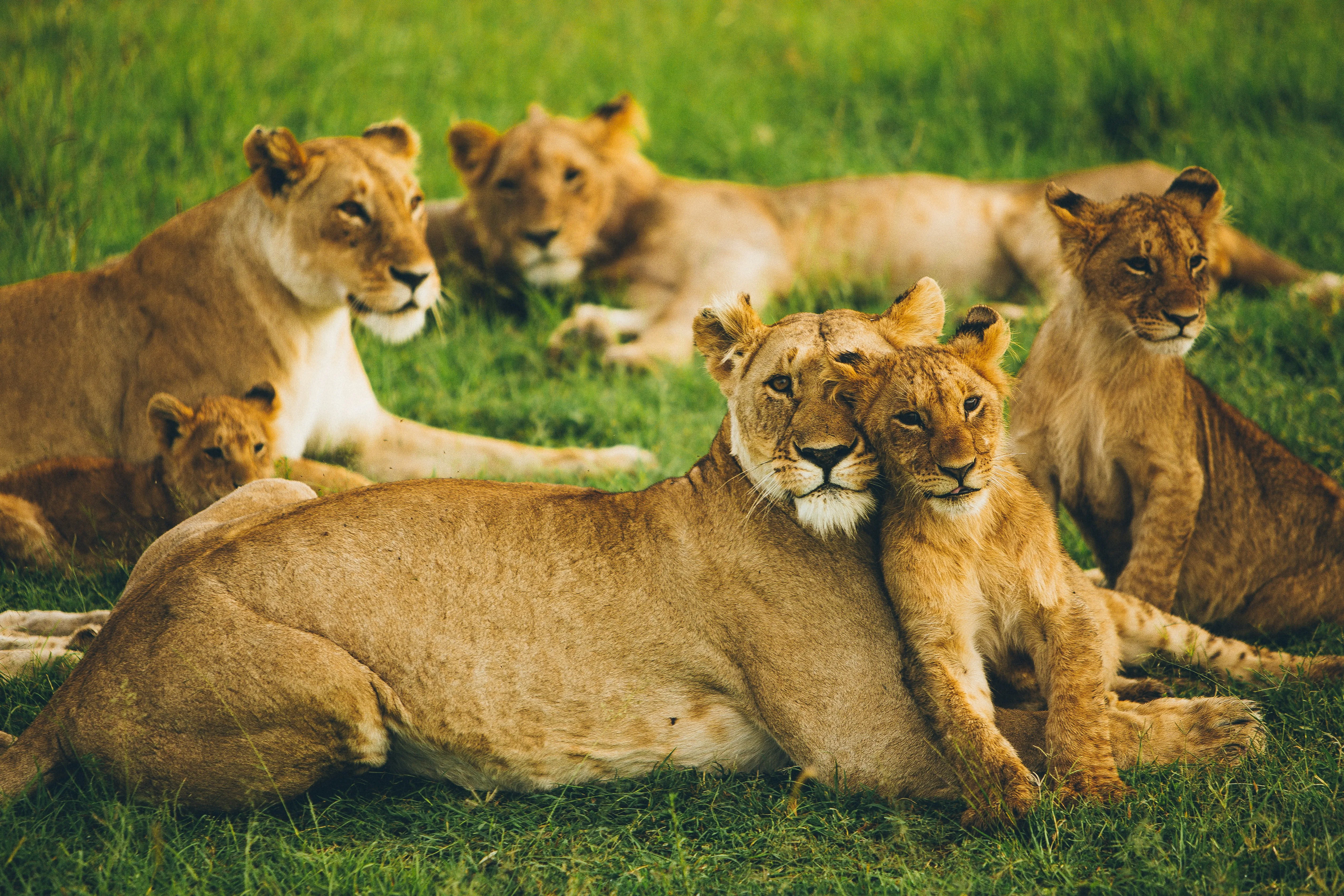
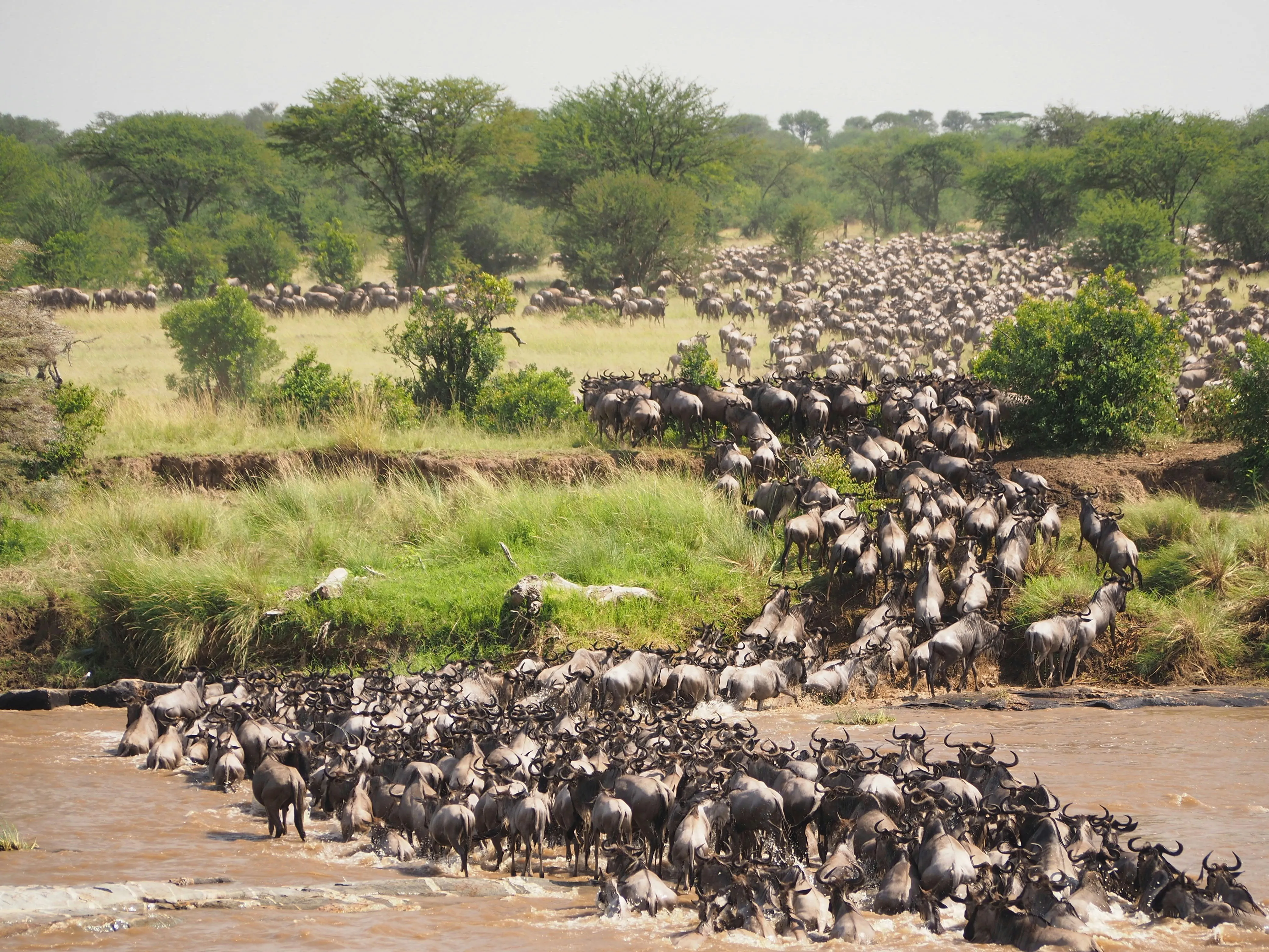
Resident lion prides, cheetah on the open plains, and leopard along the wooded riverbanks. Elephant, buffalo, Maasai giraffe, topi, eland, hippo, and crocodile are also regularly seen. Black rhino are present but rarely encountered. Wildebeest and zebra arrive in very large numbers when the migration moves through the ecosystem, usually between July and October. The timing changes from year to year, and river crossings can never be scheduled or guaranteed.
Activities
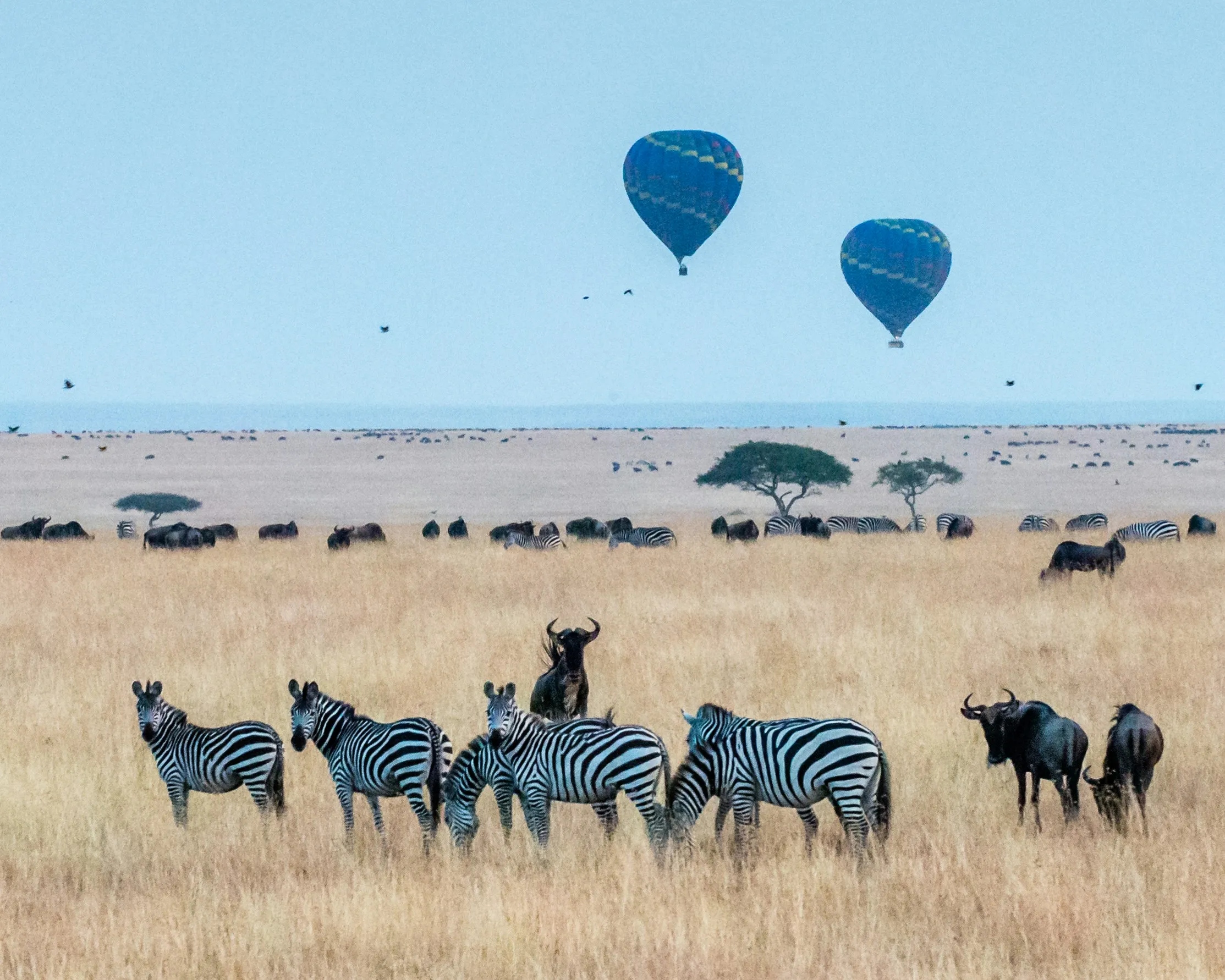
Morning and afternoon game drives, dawn hot-air balloon flights followed by a bush breakfast, guided walks, night drives, and visits to Maasai communities.
Guided walks and night drives are generally offered in the private conservancies bordering the reserve rather than inside the national reserve itself, where night driving and off-road driving are restricted. This is one of the main reasons to consider staying in a conservancy: there are fewer vehicles around a sighting.
When to go, and why
July to October is dry and usually overlaps with the migration, but it is also the busiest and most expensive period. December to March is drier again and generally quieter, with strong resident-cat viewing and good birding. April and May bring the long rains, greener landscapes, lower rates, heavier road conditions, and seasonal closures at some camps.
Sample experiences
A dawn balloon flight over the plains, followed by breakfast in the open. Several nights in a conservancy for quieter cat viewing, walking, and night drives, followed by time inside the reserve during migration season.